AWS Well-Architected Framework updates: what changed
On 16 November 2026, AWS announced AWS Well-Architected Framework updates that split the guidance into two areas: Well-Architected Cloud Foundations and Well-Architected Cloud Workloads. AWS also retired the non-technical best practices. According to the announcement, customers asked for a more efficient way to run reviews. My introduction to the framework explains the six pillars; this post covers what changed.
Key takeaways
- AWS split the framework into Cloud Foundations and Cloud Workloads.
- Cloud Foundations holds 45 practices in seven capabilities; Cloud Workloads fell from 307 to 216, AWS says.
- AWS retired the business, people, and process guidance and refreshed service references.
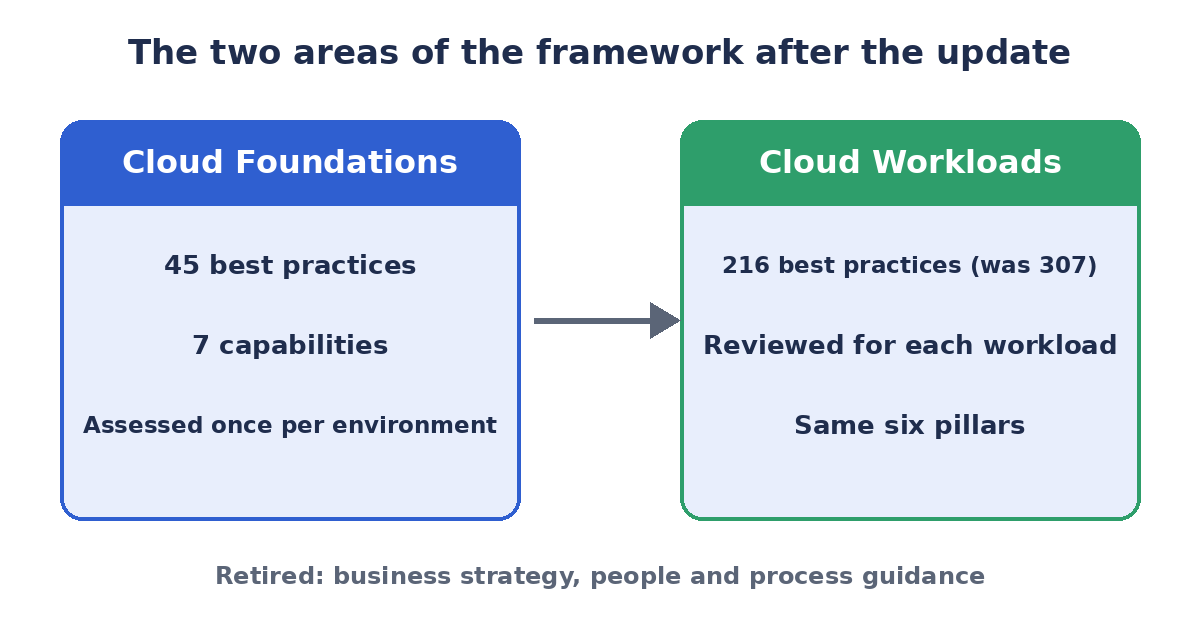
Figure 1: The two areas of the framework
I. What do the AWS Well-Architected Framework updates change?
The updates to the AWS Well-Architected Framework reorganize the guidance into two areas and retire best practices that depend on human judgment. AWS says every remaining practice now addresses a technical decision that you, or an agent acting for you, can review.
AWS describes the framework as a collection of best practices on its Well-Architected overview page.
II. What are Well-Architected Cloud Foundations and Well-Architected Cloud Workloads?
Well-Architected Cloud Foundations is the area that covers environment-wide decisions such as multi-account structure, identity, and cost governance. Well-Architected Cloud Workloads is the area that covers how you design, build, and operate each workload. AWS says the split lets you assess guardrails once.
A capability is a group of related best practices that share a common objective. Well-Architected Cloud Foundations contains 45 best practices across seven capabilities; AWS says 33 of them come from moving or merging pillar practices.
In the workload area, similar practices were combined and out-of-scope practices retired, with no loss of technical coverage, the announcement says. The framework documentation describes a Cloud Foundations custom lens and a Cloud Workloads custom lens.
III. What is new in each pillar?
The six pillars all changed in the update. According to the announcement, Security, Reliability, Performance Efficiency, and Cost Optimization moved environment-wide practices into Well-Architected Cloud Foundations, while Operational Excellence and Sustainability introduced new capabilities. Every pillar gained or combined workload-level practices.
Operational Excellence adds a practice for managing rollouts of external dependencies and expands guidance on AI agents for telemetry, dashboards, and incident investigation, with named human ownership.
Security: AWS moved account-wide concerns into Cloud Foundations and added workload practices for permissions management, detection metrics, and secure coding. See my post on AWS security and the shared responsibility model.
Reliability: AWS moved three networking practices into the Networking and connectivity capability of Cloud Foundations and added a practice on cyber resilience for backup data against ransomware.
Performance Efficiency: AWS moved the policies and reference architectures practice into Cloud Foundations and refocused Architecture selection on validating workload requirements with key performance indicators.
Cost Optimization: AWS moved account-level concerns into the Cloud financial management capability, merged decommissioning guidance into one resource lifecycle practice, and added one on generative AI for operational efficiency.
Sustainability: AWS added practices that follow how teams reduce workload impact, including choosing a smaller machine learning model where one meets the requirement.
IV. What did AWS retire and remove from the framework?
AWS retired the best practices centered on business strategy, people, and organizational processes, and removed references to services that no longer accept new customers or reached end of support. The announcement says these practices depend on human judgment and context, not telemetry.
AWS publishes a list of services in maintenance and service lifecycle definitions; the announcement says AWS added services launched since the previous release. I covered developer services in maintenance in my recap of an AWS Egypt meetup.
V. How do you use the AWS Well-Architected Framework updates in your next review?
Your next review should follow the two-area split AWS introduced. Assess Well-Architected Cloud Foundations once for the environment, then check each workload only against Well-Architected Cloud Workloads, which AWS says makes reviews faster. The steps below are my suggestions, not AWS instructions.
- Assess Well-Architected Cloud Foundations once per environment.
- Review each workload only against Well-Architected Cloud Workloads.
- Map old checklist items to the new capabilities.
- Cover retired topics with the other AWS resources.
- Check services you use against the AWS maintenance list.
- Re-run reviews in the AWS Well-Architected Tool, the tool AWS offers for reviews.
- Read the user guide introduction if you are new to the tool.
VI. What we could not check
I could not check these numbers inside the framework itself; they come from the announcement alone. I did not review the per-capability practice lists or test the update in the AWS Well-Architected Tool. The table below shows what we checked.
| Claim | What we checked | Result |
|---|---|---|
| 45 practices in 7 capabilities | Read the AWS announcement | Stated by AWS |
| 216 workload practices, down from 307 | Read the AWS announcement | Stated by AWS |
| 33 foundational practices moved or merged | Read the AWS announcement | Stated by AWS |
| Business, people, and process guidance retired | Read the AWS announcement | Stated by AWS |
| Service references updated | Read the AWS announcement | Stated by AWS |
Frequently asked questions
Did AWS add or remove any pillars?
No. The announcement of 16 November 2026 keeps all six pillars. What changed is the organization: account-level practices moved into Well-Architected Cloud Foundations, and the pillars still organize the workload guidance.
Why did AWS retire the non-technical best practices?
The release focuses on technical architecture. AWS says practices that depend on human judgment are hard to automate, so it retired them and continues to cover those topics through other resources.
How many best practices does the updated framework contain?
According to the announcement, Well-Architected Cloud Foundations now contains 45 best practices across seven capabilities, and Well-Architected Cloud Workloads now contains 216, down from 307, with no loss of technical coverage.
In which languages will the updated framework be available?
AWS says the updated framework will soon be available in 11 languages, as of November 2026: English, Spanish, French, German, Italian, Japanese, Korean, Indonesian, Brazilian Portuguese, Simplified Chinese, and Traditional Chinese.
The AWS Well-Architected Framework updates change where each best practice lives, not the pillars themselves, so review notes need mapping to the two new areas. Records in this post were last checked in November 2026.